Every tutor has had the session that got away.
You sit down, ask how school was, open the book wherever you stopped last week, and start. Fifty minutes later you have covered a lot of ground. And if a parent asked you on the doorstep what their child can do now that they could not do an hour ago, you would have to think about it.
It is rarely a knowledge problem. You know your subject. It is a shape problem. A session with no shape becomes a guided tour of the textbook, and a guided tour is pleasant, and almost nothing from it sticks.
So here is the shape we would give a one-hour session. The timings are a starting point, not a law. Shrink them for a forty-five minute slot, and for younger children.
A one-hour tutoring session, minute by minute
- 0 to 5: three questions on last week. No notes, no warning.
- 5 to 8: say what today is for. One sentence your student could repeat.
- 8 to 20: teach one idea. You do it, out loud, while they watch.
- 20 to 35: do it together. They hold the pen. You ask the questions.
- 35 to 50: they do it alone. You watch, and you keep quiet.
- 50 to 55: they explain it back. In their words, not yours.
- 55 to 60: set the homework, and say why.
That is the whole thing. The rest of this post is why each part is there, and what goes wrong when you skip it.
Start with last week, not this week
The most valuable five minutes of the hour are the first five, and most of us spend them on small talk and finding the right page.
Ask three short questions about what you covered last time. Not "do you remember circuits?", which only ever gets a nod. Real questions with real answers. What does a resistor do? What happens to the current if you add a second bulb? Draw me the symbol for a cell.
This does two jobs. Pulling something back out of memory is one of the best ways there is to make it stay, and the evidence for that is worth ten minutes of any tutor's time.
It also tells you the truth. If all three answers come back wrong, today's plan has just changed, and it is far better to find that out at minute four than at minute forty.
Nothing rides on these three questions, and your student should know it. You are not marking them. You are finding out where to start.
Say what today is for
"Today we are doing fractions" is a topic. "By the end of today you will be able to add two fractions with different denominators, without a calculator" is a goal. The second one can be checked, by both of you, at minute fifty.
Say it out loud and write it at the top of the page. It sounds like a formality. It is the thing that stops a session drifting, because every tangent can now be held up against it.
I do, we do, you do
This is the oldest pattern in teaching, and it has survived because it works.
I do
Work one example yourself, slowly, saying your thinking out loud. Not only the steps. The decisions. "I am looking at the denominators first, because if they match this is easy, and if they do not I have a job to do." The steps are in the textbook. The decisions are what a family is paying you for.
One idea, not three. The temptation to cover more is strongest with a bright student and a parent in the next room. Resist it. An hour that lands one idea properly beats an hour that waves at four.
We do
Now a second example, and the pen changes hands. They write. You ask. "What do we look at first?" "Why that number?" When they stall, ask a smaller question before you offer an answer.
You do
Then a third and a fourth, alone, while you watch. This is the hardest part of tutoring, because you have to sit quietly while somebody makes a mistake you could fix in two seconds.
A student who finds their own error has learned something. A student whose tutor pounced has learned to wait for the tutor.
Let the mistake happen. Let them reach the end. Then ask them to check it.
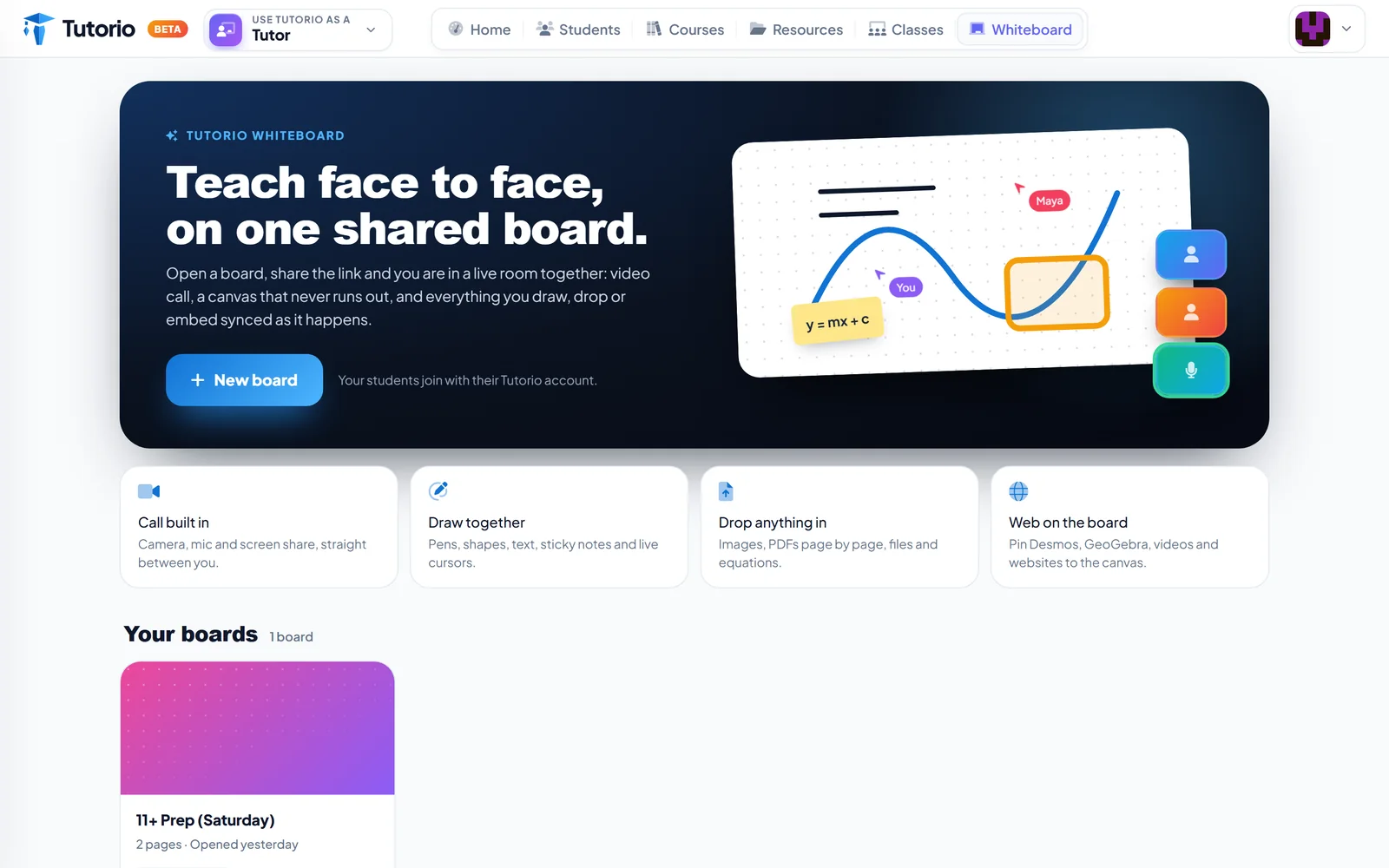
Online, this only works if you can see the working as it is written, which a video call on its own will not show you. A shared canvas will. That is why Tutorio Whiteboard puts the call and the board in one tab, and there is more on teaching through a screen in our online tutoring tips.
With a group, ask everyone at once
Everything so far assumes one student. With four or six, the weak point is the question you put to the room. One hand goes up, it is the hand that always goes up, and you have learned nothing about the others.
The fix is to collect an answer from everybody before anybody hears the right one. Mini whiteboards held up on a count of three will do it. So will a live lesson, where each student answers on their own phone and you see the spread before you reveal anything.
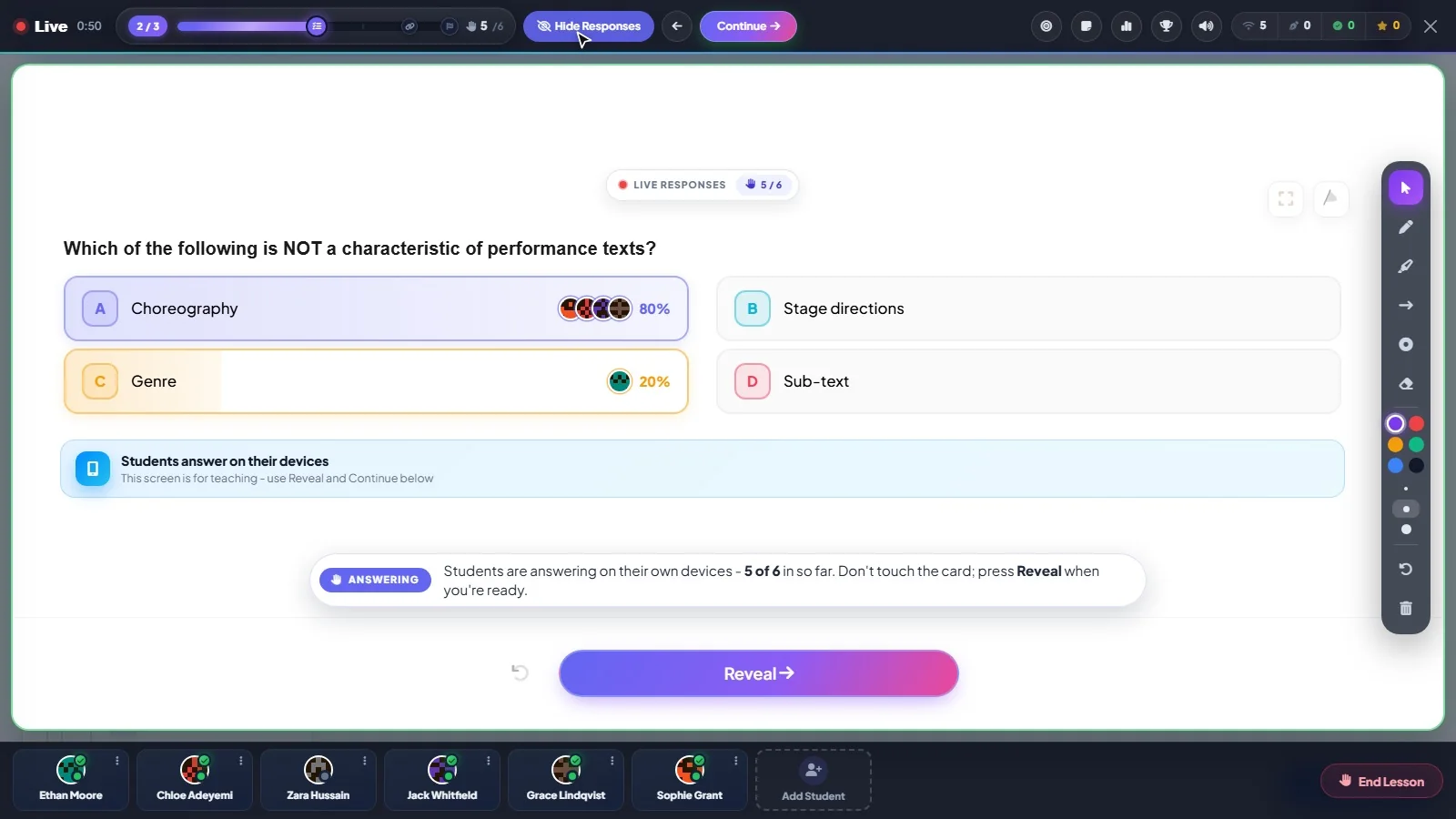
That screen is taken apart here. The principle holds with or without software: never move on because one person was right.
Finish by making them explain it
Five minutes from the end, close the book and say: "Pretend I missed today. Teach me."
What comes back is the real record of the session. If they can explain it in their own clumsy words, it went in. If they recite your phrases in your order, it is sitting on the surface, and next week's three questions should go straight back to it.
Then look together at the goal you wrote at the top of the page. Did you get there? Saying yes out loud matters more than it should. Students who are sent to a tutor have often spent a long time feeling behind. Ending each week on proof that they can do a new thing is a large part of the job.
Homework with a reason attached
Set less than you think, and say why. "Do these six, because they are exactly the type that comes up on Paper 1" gets done more often than "finish the exercise".
Then decide, now, how you will know it happened. If the answer is "I will ask next week", you already know how that goes.
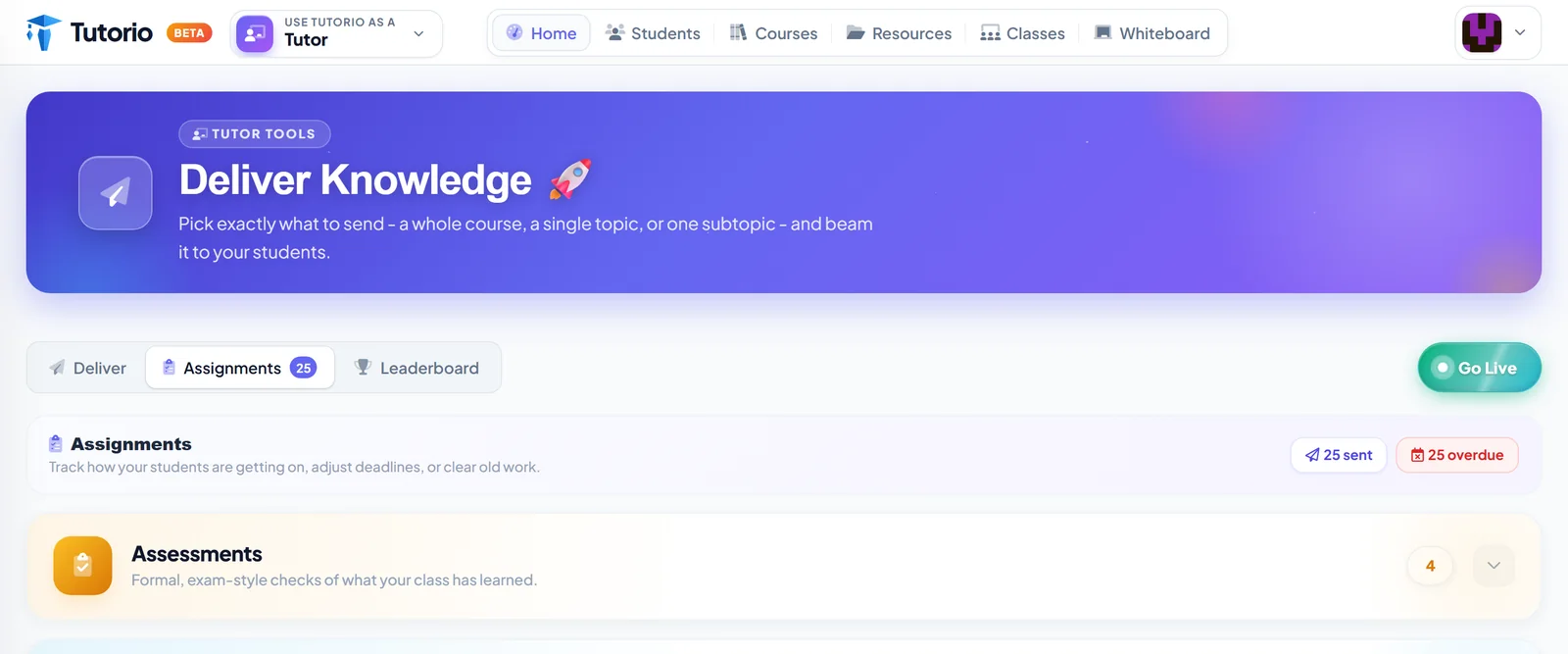
On Tutorio an assignment carries its purpose as a short briefing the student reads before they start, and overdue work sends its own reminders, so the chasing is not your job. A paper homework diary and a text to a parent can do it too. What matters is that the loop closes.
The two minutes after they leave
Before the next student arrives, write three lines: what you covered, what went wrong, and the three questions you will open with next week.
That last line is the trick. Next week's first five minutes are now planned, and it took you thirty seconds.
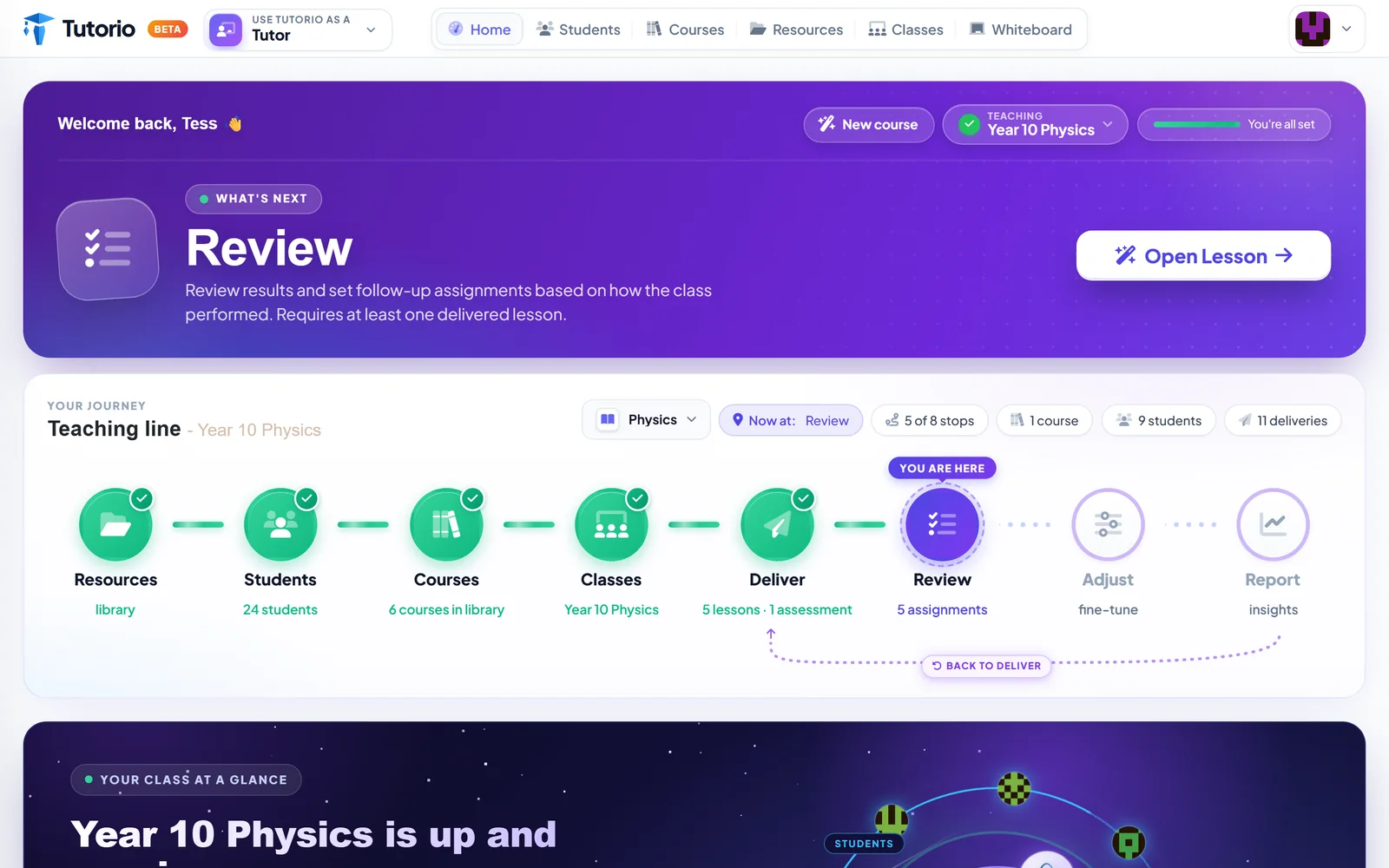
If parents are paying, send them something as well. It does not have to be a report. One line on what their child can do now, and one thing to ask about at dinner, is plenty. If you track progress in Tutorio, a private progress link does that without you writing a word.
What changes in a first tutoring session
The first session with a new student is different, because you do not yet know where to pitch anything. Spend it finding out.
- Ask what they find hard, then check. Students are often wrong about their own weak spots, in both directions.
- Bring questions at three levels. One they should find easy, one at the level they are meant to be working at, and one above it. Watch where the confidence goes.
- Watch how they work, not only whether they are right. Do they read the whole question? Do they write anything down? Do they give up at the first unfamiliar word?
- Teach one small thing anyway. They should leave the first session able to do something new. It is the best advertisement for the second.
- Agree the goal with the parent. A grade, a confidence problem, an entrance exam. You need to know which before you plan week two.
Write down what you learn: reading level, what helps, what to avoid, what they care about. Whether it lives in a notebook or in a learner profile, you will want it in six weeks' time when you are planning in a hurry.
The shape is the point
None of this is complicated. Recall, goal, show, share, watch, explain, set. Most good tutors do it by instinct on their best days.
Writing the shape down just makes your ordinary days look more like your best ones.

Questions people ask
How long should a tutoring session be?
An hour is a common length for secondary students, and forty-five minutes often suits younger children better. The structure matters more than the length: recall, one new idea, practice, and an explain-back.
What should I do in a first tutoring session?
Find out where the student is. Ask what they find hard and then check with questions at three levels, watch how they work, teach one small thing so they leave with a win, and agree the goal with the parent.
How do I plan a tutoring lesson?
Decide the one thing the student should be able to do by the end, pick three recall questions from last week, and prepare four examples: one you model, one you do together and two they do alone.
How much homework should a tutor set?
Less than you think, with a reason attached. A short task the student understands the point of gets done more often than a long exercise, and you should decide in advance how you will check it happened.
How do I stop one student dominating a group tutoring session?
Collect an answer from everyone before anyone hears the right one. Mini whiteboards work, and in a Tutorio live lesson each student answers on their own phone and you see who chose what before you reveal it.
Written by the Tutorio team. We build Tutorio, so these posts describe the product as it is today. Every screenshot is a real capture of the app, and anything that changes gets an updated date. Spotted something out of date? Tell us.