It usually starts with a perfectly reasonable question.
"Have you done any revision today?"
And somehow, ninety seconds later, a door has slammed, you are standing in the hall holding a tea towel, and nobody has revised anything.
If that is your house, you are in very good company. Exam season puts a strain on families, and most parents feel stuck between two bad options: nag, or say nothing and worry. There is a third. It does not require you to remember any chemistry.
You are not the teacher
Let go of the idea that helping means explaining. You do not need to know what a covalent bond is. Your child has teachers for that, a revision guide, and perhaps a tutor.
What they are short of is everything around the learning. A routine. A quiet table. Someone who notices when they have worked hard, and someone who stays calm in May. That is your job, and nobody else can do it.
Agree the plan once, then stop asking
"Have you revised?" is a question with exactly one acceptable answer, which is why it starts fights. Swap the daily question for a weekly conversation.
Sit down on a Sunday for ten minutes and let them tell you the plan: which sessions, on which days, on what. If there is no plan yet, here is how to build a revision timetable that survives a real week. Your part is to ask whether it is realistic, and to say what you will do to help, such as keeping a younger brother out of the room at five o'clock.
Then, during the week, hold them to their plan and not to yours. "It's ten past five" is a very different sentence from "shouldn't you be revising?"
Ask to be taught
The most useful thing a parent can do costs nothing. Ask your child to explain something to you.
"What did you do today?" gets "stuff". Try this instead: "Teach me one thing from today. I never understood electrolysis." Then be a slow, curious pupil. Ask why. Ask what would happen if.
Explaining an idea out loud, from memory, is one of the best kinds of revision there is, and far better than reading the notes again. The place where the explanation falls apart is exactly the bit they need to go back over, and they will usually notice it before you do. The reasons are in our post on retrieval practice.
Hold the flashcards
Here is the other job that needs no subject knowledge: quizmaster. Take the flashcards, read the front, wait for an answer, turn the card over. The answer is printed on the back. You cannot get it wrong.
Two rules. They have to say the answer before you show it, because "oh yes, I knew that" does not count. And the cards they miss go back into the pile, not to the bottom of it.
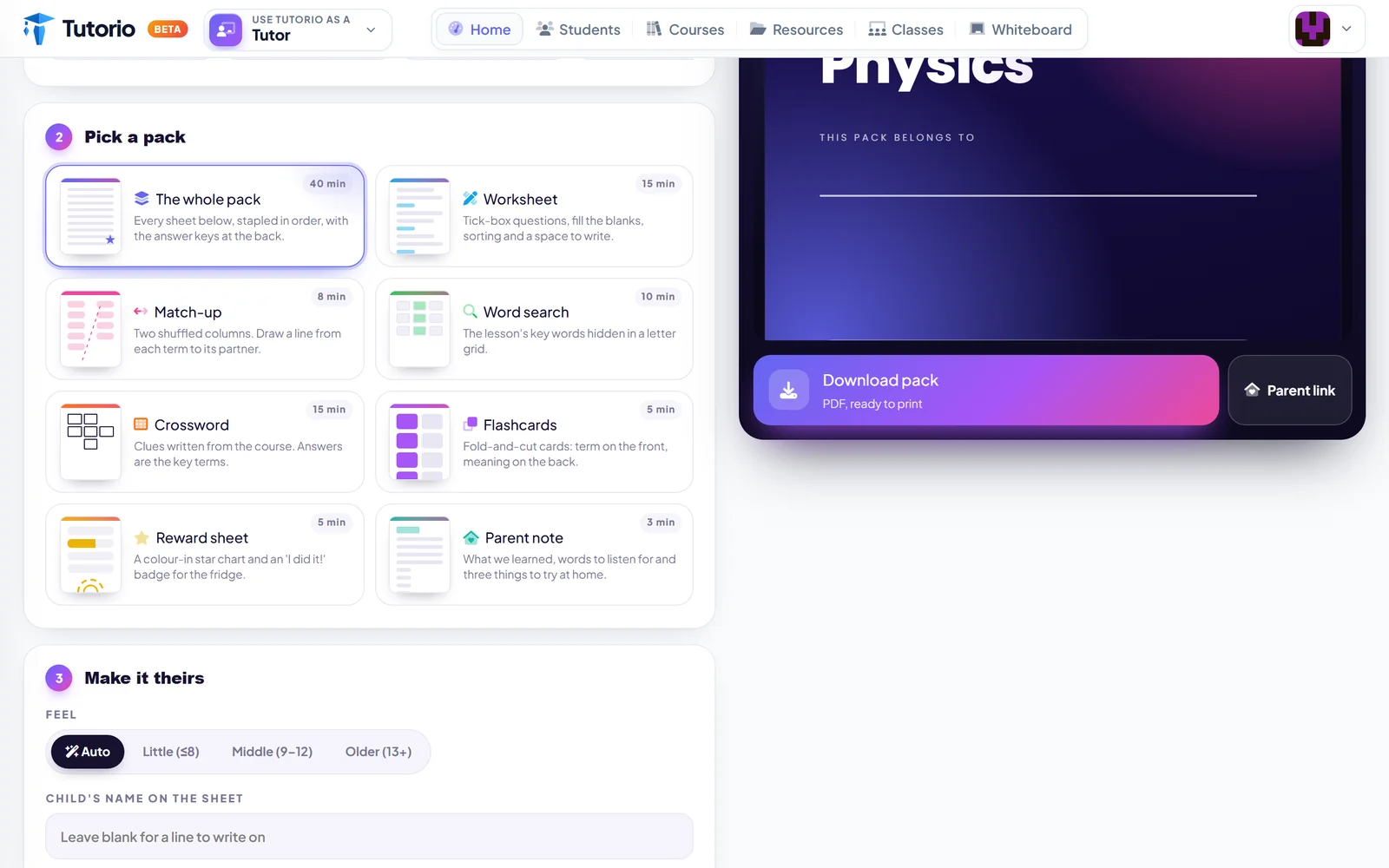
If your child's tutor uses Tutorio, they can print flashcards, a crossword or a worksheet from the lessons your child has actually been taught. The pack can include a note for you: what was covered, words to listen out for, and three things to try at home. We wrote about it in praise of paper.
Notice the effort, not the score
A mark is the result of weeks of work, and by the time it arrives there is nothing to be done about it. Effort is happening today, and it is the part your child controls.
So say what you saw them do. "You've done four sessions this week" lands better than "you're so clever", and much better than silence followed by a remark about a mock result.

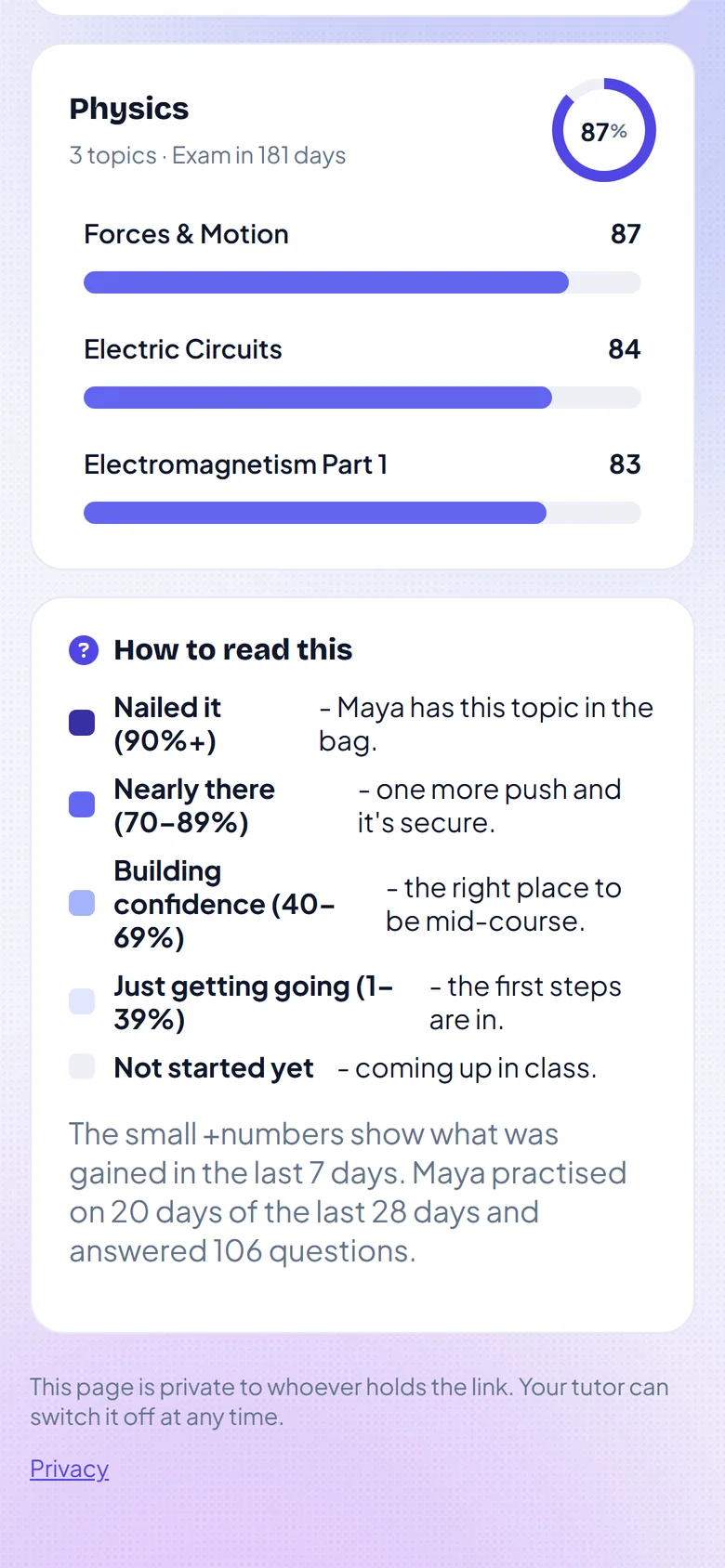
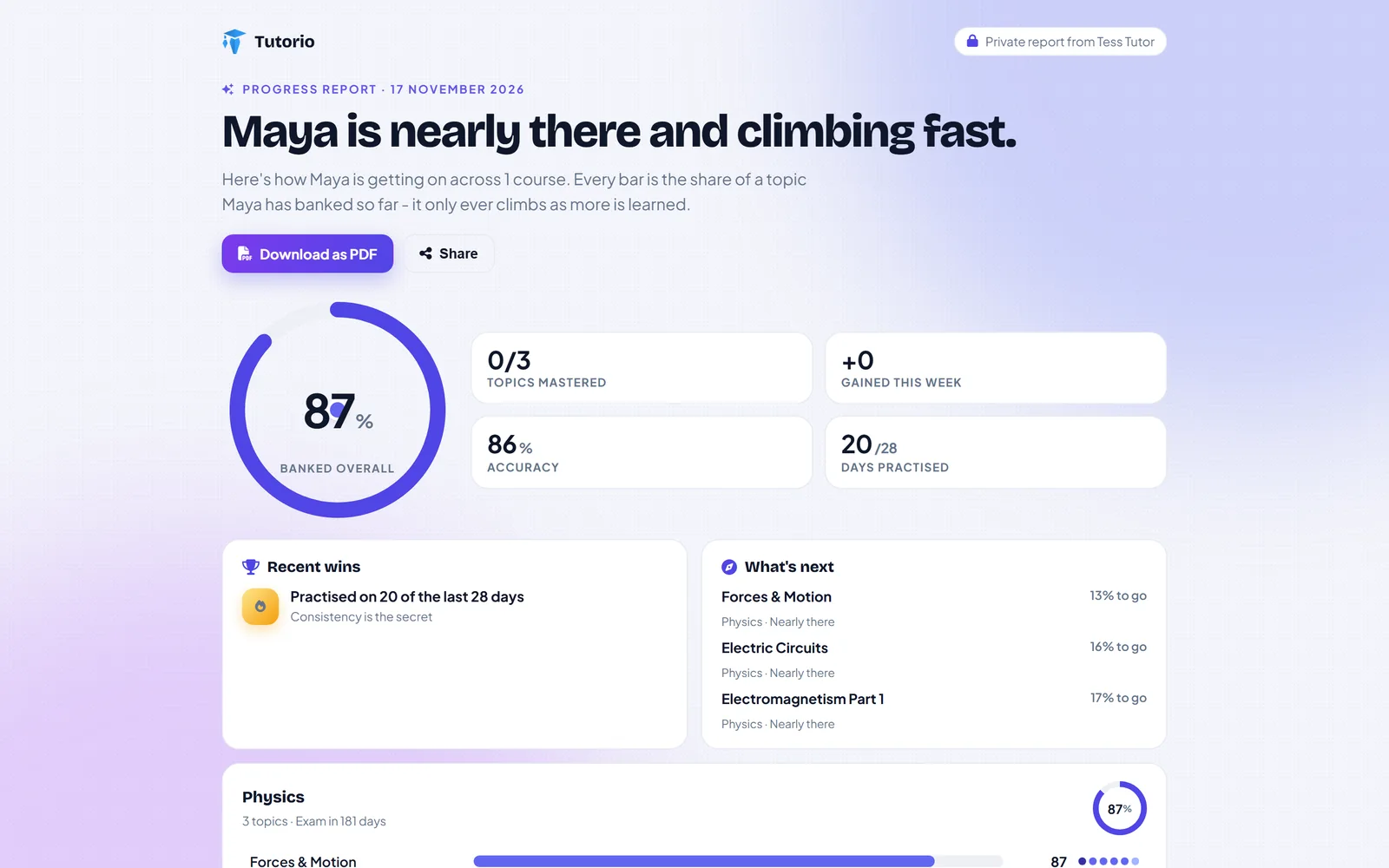
This is why the progress page a tutor can send from Tutorio puts days practised right beside the percentages. A parent cannot help with electromagnetism. A parent can absolutely say "twenty days this month, that's brilliant" over dinner. Here is what that report looks like.
Phones: agree a rule, do not confiscate
The phone is the obvious enemy. It is also where a good deal of revision now happens. Taking it away tends to start a war, and it removes the flashcards along with the group chat.
Better to agree a rule together: phone in another room during a session, back in hand at the break. Sessions should be short, so that is not long to wait. A rule they helped to write is one they might keep.
Sleep, food and the day off
Dull, and it matters. A tired teenager gets less out of an evening's work, and late-night cramming is usually borrowed from tomorrow. Protect bedtime in exam season, even when they insist they need one more hour.
And protect the day off. A rest that was planned feels like a rest. One taken out of guilt does not.
When to worry, and who to tell
Some nerves before exams are normal, and can even be useful. It is worth acting if your child stops sleeping or eating properly, stops seeing friends, or slides from anxious to flat and starts saying there is no point.
Start with the school. A form tutor or head of year has seen this many times and can change more than you might expect. If your child has a tutor, tell them too, because they can adjust the pace. And if you are worried about your child's mental health, speak to your GP.
The short list
- One plan, agreed weekly. Their plan, not yours.
- Be taught. Ask them to explain one thing a day.
- Hold the cards. Answer first, then turn.
- Praise the effort you saw. Not the score you hoped for.
- Guard sleep and the day off.
None of it needs you to know the subject. All of it needs you, which is rather the point.

Questions people ask
How can I help my child revise if I do not know the subject?
Ask them to teach you a topic from memory, or quiz them from flashcards with the answers on the back. Explaining out loud is strong revision in itself, and the point where they get stuck shows what to go over again.
How do I get my teenager to revise without nagging?
Agree the plan with them once a week, then hold them to their own plan instead of asking every day. A reminder of the time they chose lands very differently from "shouldn't you be revising?"
How much revision should my child be doing?
There is no single right number. Look for a steady routine of short sessions through the week, not long hours. If a realistic plan is being followed on most days, it is working.
Should I take my child's phone away while they revise?
Agreeing a rule usually works better than confiscating it: phone in another room during a session, back at the break. A lot of revision happens on the phone, and a rule they helped to set is one they are more likely to keep.
How do I know if my child's revision is working?
Ask them to explain a topic without notes. If they can get it out of their head, it has gone in. If their tutor uses Tutorio, a private progress link shows, topic by topic, what is secure and how many days they practised.
Written by the Tutorio team. We build Tutorio, so these posts describe the product as it is today. Every screenshot is a real capture of the app, and anything that changes gets an updated date. Spotted something out of date? Tell us.