Most tutors start by accident.
A neighbour's daughter is struggling with fractions. A friend's son has a mock in three weeks. You help, it goes well, they tell somebody, and by Christmas you have four students and a carrier bag full of past papers.
Somewhere in there you became a private tutor. Nobody gave you a form to fill in, because there is not one.
That is the good news, and it is also the catch. Tutoring in the UK is easy to start and almost entirely up to you to do properly. Here is what we would sort out, in the order we would do it.
This is a practical guide, not legal or tax advice. The rules differ a little between England, Wales, Scotland and Northern Ireland, and they change. Each section links to the official page, and that page is the one to trust.
Do you need a qualification to be a tutor?
No law requires one. You do not need a teaching qualification, a degree or a licence to tutor privately in the UK. The government's guidance for parents on tuition and other out-of-school settings says there is no single legal framework covering them. It exists to help parents choose safely, because nobody else is checking for them.
So the real question is not whether you are allowed. It is whether a parent should choose you, and that comes down to three things:
- You know the subject. Comfortably beyond the level you are teaching.
- You know the exam. The board, the specification, and how the papers are marked.
- You can explain. Twice, in two different ways, without getting cross.
A qualified teacher has a head start on the second and third. Plenty of excellent tutors are not teachers, and they got there by doing the reading.
Get a DBS check
Parents will ask, and they are right to. If you are going to tutor children, sort this out before you advertise.
There is more than one level of check. Anyone can apply for a basic DBS check on themselves, for work in England and Wales. Scotland and Northern Ireland have their own versions, from Disclosure Scotland and AccessNI.
For years, a self-employed tutor could not get the more thorough enhanced check on themselves, because an organisation had to ask for it. That changed in January 2026. Self-employed people can now apply for an enhanced check through a registered umbrella body where the role is eligible, and the announcement gives private tutors who teach children as an example.
The fees are set by the DBS and they change, so take the current price from those pages. And whichever certificate you hold, offer to show it before anybody has to ask.
Tell HMRC
If families pay you directly, you are almost certainly self-employed, and that makes the tax your job.
There is a trading allowance of £1,000. If your total income from self-employment in a tax year is at or below that, before expenses, you generally do not need to tell HMRC. Above it, you must register for Self Assessment by 5 October in the following tax year. The detail is on gov.uk under tax-free allowances on trading income.
From day one, keep a simple record of every payment in and every cost out: books, printing, software, travel. A spreadsheet is fine. Done weekly it takes five minutes. Done in January it takes a weekend.
Look after people's data
A tutor holds names, addresses and phone numbers, and notes about children: what they find hard, and sometimes a diagnosis. That is personal information, and data protection law applies to a sole trader just as it does to a school.
The Information Commissioner's Office says organisations that use personal information, sole traders included, need to pay a data protection fee unless an exemption applies, and that many can rely on one. Its self-assessment tool tells you which side of the line you are on. Do it once and keep a note of the result.
Then the common-sense part. Keep only what you need, keep it behind a password, and delete it when a student leaves.
Think about insurance
We could not find a law that makes a self-employed tutor working alone hold insurance. The compulsory business cover listed on gov.uk is employers' liability, and that applies once you employ somebody.
Many tutors buy public liability cover anyway, particularly when students come to their home, and an agency or a venue may ask for it. Treat it as a decision, not an obligation, and make it on purpose.
Decide what you teach, and to whom
"I tutor maths" is harder to sell than "I tutor GCSE maths for students trying to get from a 4 to a 6". The narrower you are, the easier you are to recommend, and recommendation is how most tutors fill their week.
Start with one subject, one level and one exam board. Read the specification the whole way through. Then sit the last three years of papers yourself, against the clock, and mark them with the mark scheme. There is no faster training, and the papers are on the exam board's website.
Set a price you can say out loud
We are not going to give you a number. Rates vary a great deal by subject, level and where you live, and any figure we printed would be wrong for most of the people reading it. Look at what tutors near you charge for the same level, on agency sites and local listings, and place yourself honestly among them.
Three things matter more than the figure:
- Decide it before the first enquiry. A price you have to think about on the phone always comes out lower.
- Write down your cancellation terms. How much notice, and what happens to a missed session. Send them before the first lesson, not after the first no-show.
- Take payment the same way every time. In advance, for a block or a month, is kinder to everybody than chasing cash on a doorstep.
Find your first students
- Tell everyone you know. The first student nearly always comes from a friend of a friend.
- Go where local parents already are. School-gate groups, community pages, the noticeboard in the library.
- Consider an agency or a marketplace. They take a cut, and in return they bring enquiries while you have no reputation yet.
- Offer a first conversation, not a free lesson. Fifteen minutes with the parent about what they are worried about does more than a free hour.
- Ask happy parents to pass your name on. Most are glad to. Almost none will think of it unless you ask.
The first three students are the hard ones. After that, if you are good, it is mostly word of mouth.
Plan the first session
A new student's first hour is for finding out where they are, and for sending them home able to do one new thing. There is a full plan for it in how to structure a tutoring session. If you will be teaching on a call, read our online tutoring tips before you do.
Get your materials in order early
Back to that carrier bag. Within a term you will own specifications, past papers, mark schemes and your own notes for every student, and you will be hunting for the right one ten minutes before each lesson.
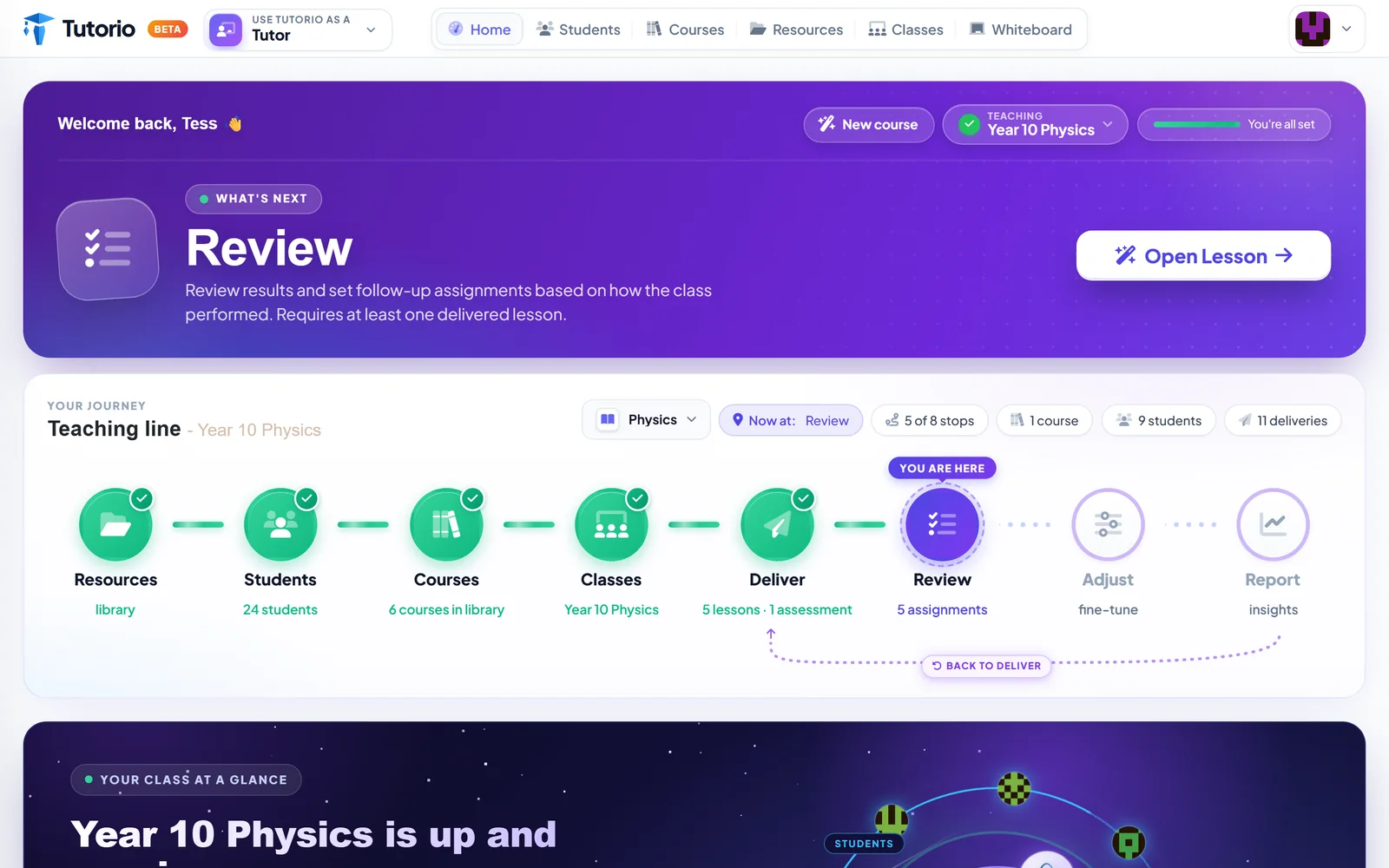
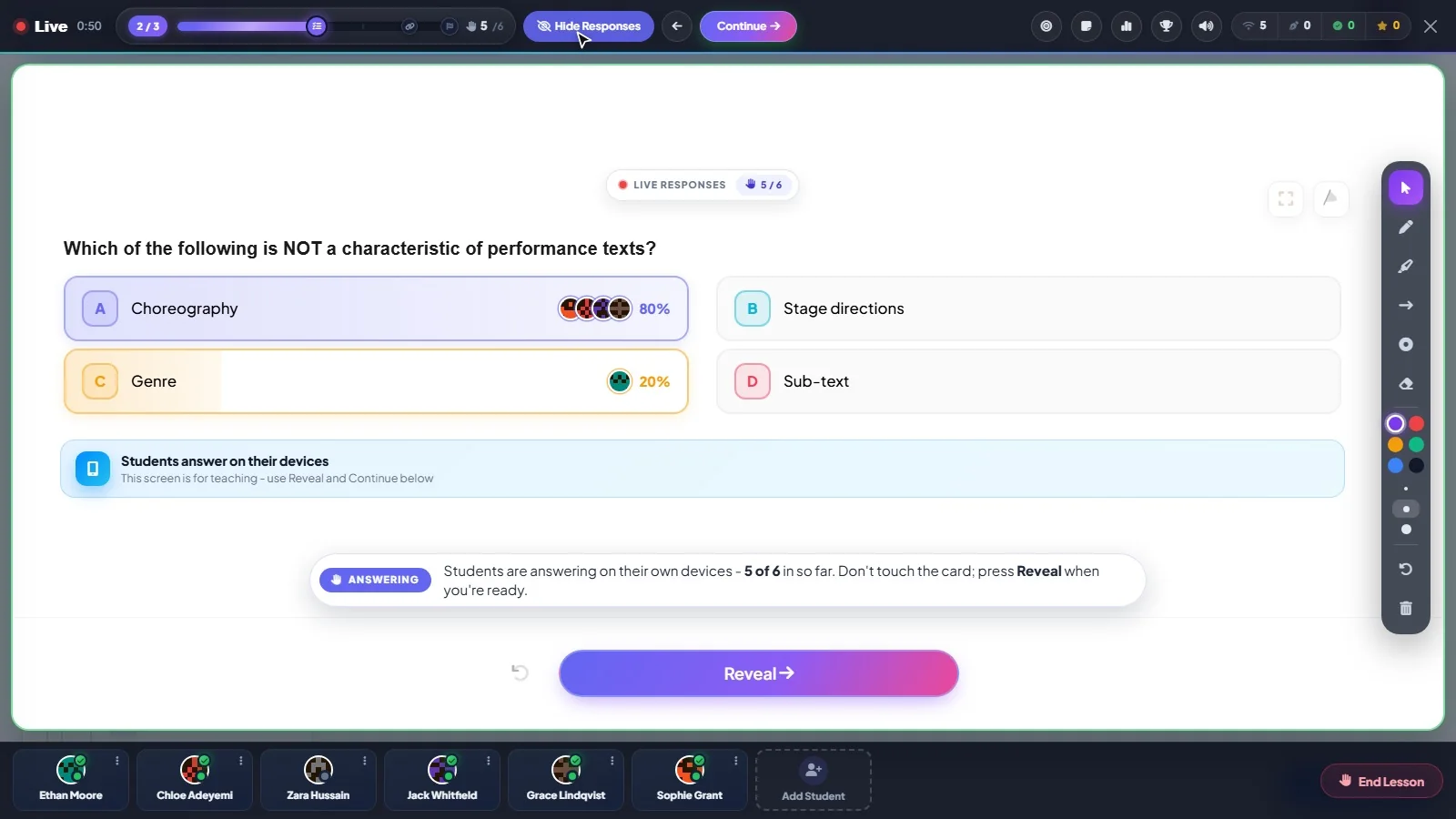
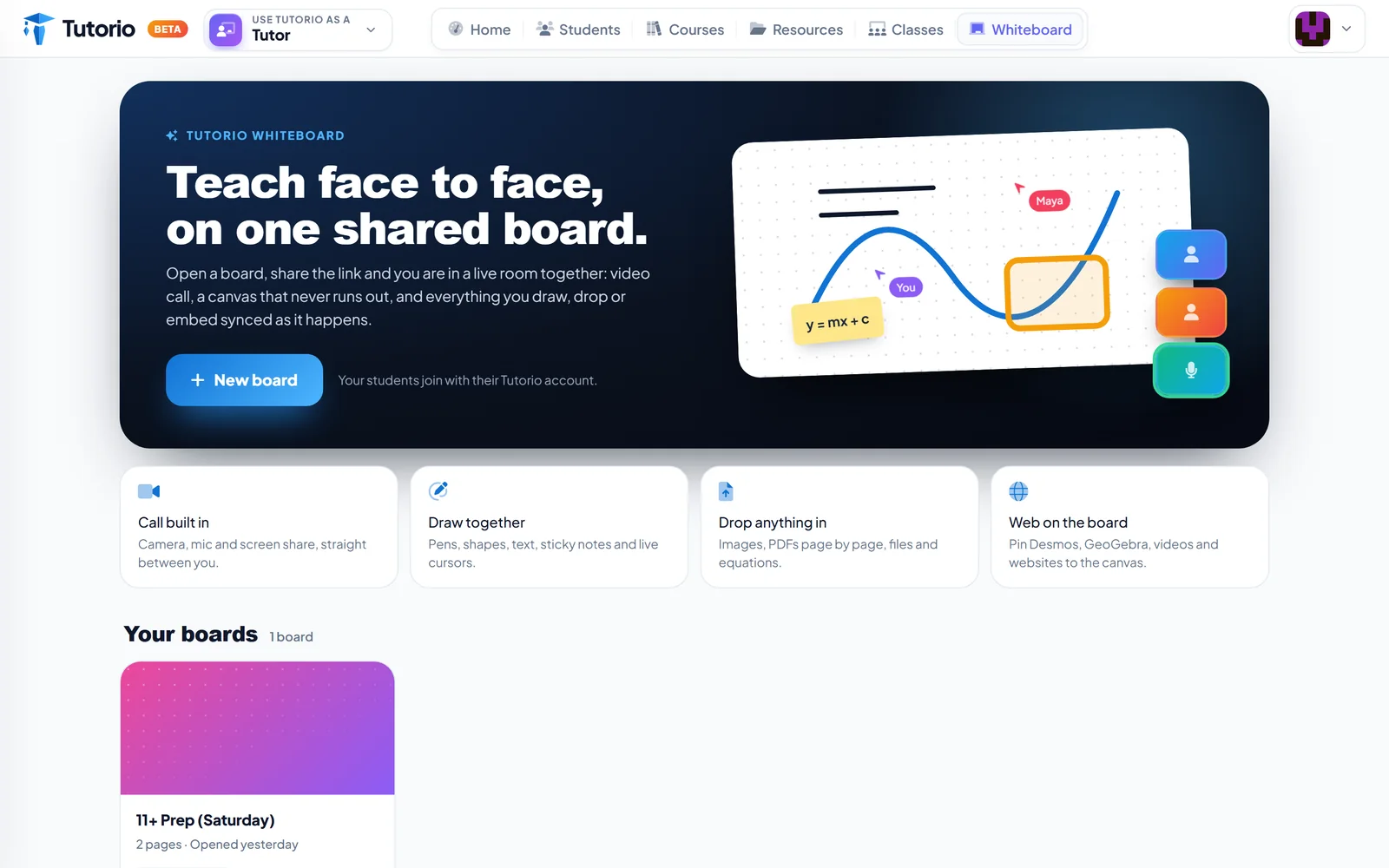
This is the part Tutorio is for. The tutor workspace files your resources, turns them into lessons students do on their phones, and shows where every student stands without a markbook. The workspace needs a tutor plan. Students never pay.
The checklist
- Choose a subject, a level and an exam board, and sit the past papers yourself.
- Get a DBS check, or the equivalent where you live.
- Check whether you need to register with HMRC, and start a record of income and costs.
- Run the ICO's self-assessment for the data protection fee.
- Decide about insurance.
- Set your price and write down your cancellation terms.
- Tell everyone, and plan the first session.
None of it takes long. All of it is easier before the first student than after the tenth.

Questions people ask
Do I need a qualification to be a private tutor in the UK?
No law requires one. What parents look for is strong subject knowledge, familiarity with the exam board and its papers, and the ability to explain clearly.
Do private tutors need a DBS check?
Parents will expect one, and agencies and schools usually ask. Anyone can apply for a basic check, and since January 2026 self-employed people in eligible roles, such as tutors who teach children, can apply for an enhanced check through a registered umbrella body.
Do I have to pay tax on tutoring income?
If your self-employed income is more than the £1,000 trading allowance in a tax year, you must register for Self Assessment with HMRC by 5 October in the following tax year. The rules are on gov.uk.
How much should I charge as a private tutor?
It depends on your subject, the level and where you live, so compare yourself with tutors nearby who teach the same level. Decide the rate and your cancellation terms before your first enquiry.
How do I find my first tutoring students?
Start with people you know and the places local parents already gather. An agency or marketplace can bring enquiries while you build a reputation, and after the first few students most work comes by recommendation.
Do I need insurance to tutor?
We could not find a law that requires it for a self-employed tutor working alone. Many tutors choose public liability cover, and an agency or venue may ask for it.
Written by the Tutorio team. We build Tutorio, so these posts describe the product as it is today. Every screenshot is a real capture of the app, and anything that changes gets an updated date. Spotted something out of date? Tell us.