There is a particular kind of educational game that every child can smell from across the room.
You know the one. A cartoon wizard asks you what seven times eight is, and if you get it right he does a little dance. It is a worksheet wearing a hat. Children are not fooled, and they are faintly insulted that anyone thought they would be.
So when we built the Arcade, we set ourselves one rule. The games had to be games first.
Five cabinets
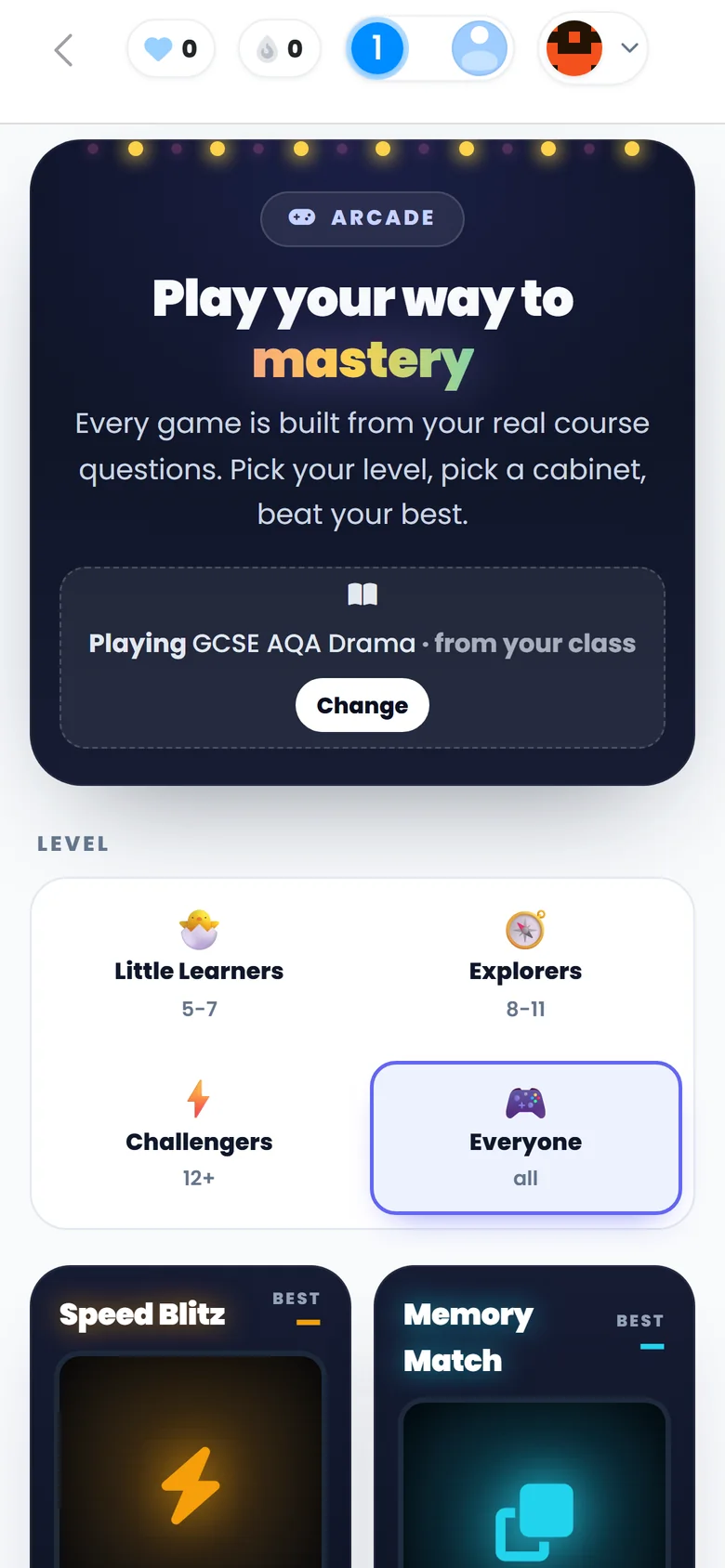
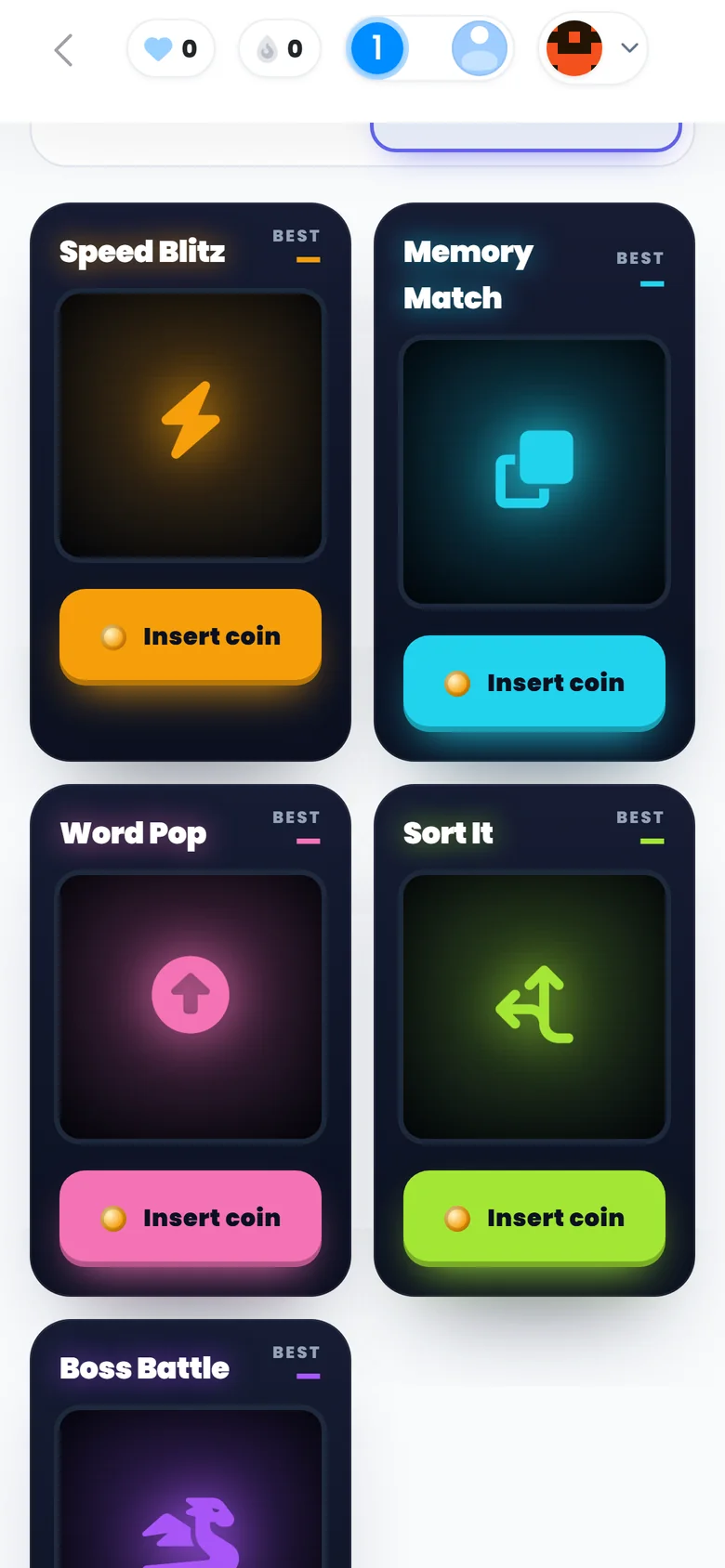
It looks like an arcade because it is one. A row of glowing cabinets, each with its own colour and its own button that says, of course, Insert coin.
- Speed Blitz. Beat the clock, and chain answers together for combo multipliers.
- Memory Match. Flip the tiles and pair every term with its match.
- Word Pop. Pop the right word before the balloon floats away.
- Sort It. Flick every item into the right bin.
- Boss Battle. Every right answer lands a hit. Three hearts. One boss.
Every cabinet keeps your best score in the corner, which is the oldest trick in gaming and still the most effective. Nobody needs telling to beat their own high score.
The catch, which is the whole point
Look at the dark panel at the top of the first screenshot. It says: Playing GCSE AQA Drama - from your class.
Every question in every cabinet is built from the real course that student is studying. Not general knowledge. Not a generic bank of trivia. The actual content their tutor is teaching them, this term.
They think they are playing Memory Match. They are revising stage directions. Both things are true.
That is the difference between this and the dancing wizard. The game is real and so is the content, and neither one is a costume for the other. There is a Change button too, so a student with three subjects can pick which one they are playing.
Pick your level
Before the cabinets there is a choice of four:
A seven-year-old and a fifteen-year-old should not be playing at the same speed. One wants big friendly targets. The other wants to be genuinely beaten now and then, or they get bored and wander off.
Why bother with games at all?
Because of a problem every tutor knows. The lessons go well. The student understands it in the room. And then nothing happens for six days, and next week you start again from somewhere uncomfortably close to the beginning.
What fixes that is not more teaching. It is more contact with the material, little and often, between sessions. And "go and revise for twenty minutes" is a very hard sell to a twelve-year-old on a Thursday.
"Go and beat your Speed Blitz score" is not.
It is the dessert, not the dinner
We want to be straight about where this fits. The Arcade does not teach anything new. Lessons do that, and they teach before they test.
The Arcade is for the idea a student met on Monday and needs to meet again on Wednesday, Friday and the following Tuesday before it sticks. It is repetition, with the boredom taken out.
Questions people ask
What games are in the Tutorio Arcade?
Five: Speed Blitz (beat the clock), Memory Match (pair every term with its match), Word Pop (pop the right word before the balloon floats away), Sort It (flick each item into the right bin) and Boss Battle (every right answer lands a hit).
Where do the questions in the games come from?
From the course the student is actually studying. A student with several subjects can press Change to pick which one they are playing.
What ages is the Arcade for?
There are four levels: Little Learners (5 to 7), Explorers (8 to 11), Challengers (12 and up) and Everyone.
Do revision games replace lessons?
No. The Arcade does not teach anything new. It is for meeting an idea again a few days after the lesson, which is what makes it stick.

Written by the Tutorio team. We build Tutorio, so these posts describe the product as it is today. Every screenshot is a real capture of the app, and anything that changes gets an updated date. Spotted something out of date? Tell us.