In a lesson, getting stuck is easy to fix. You put your hand up.
At nine o'clock at night it is different. It is you, a phone, and a paragraph that stopped making sense two sentences ago. There is nobody to ask. So most students do the reasonable thing, which is close the app and tell themselves they will look at it tomorrow.
They will not look at it tomorrow.
Rio is the small blue bird who lives in Tutorio, and that moment is his whole job.
"Explain this simply"
On any lesson card, a student can open Ask Rio. He already knows which card they are looking at, so there is no need to type out the question, which is lucky, because a student who is stuck usually cannot say what they are stuck on.
The first button most of them press is three words long: Explain this simply.
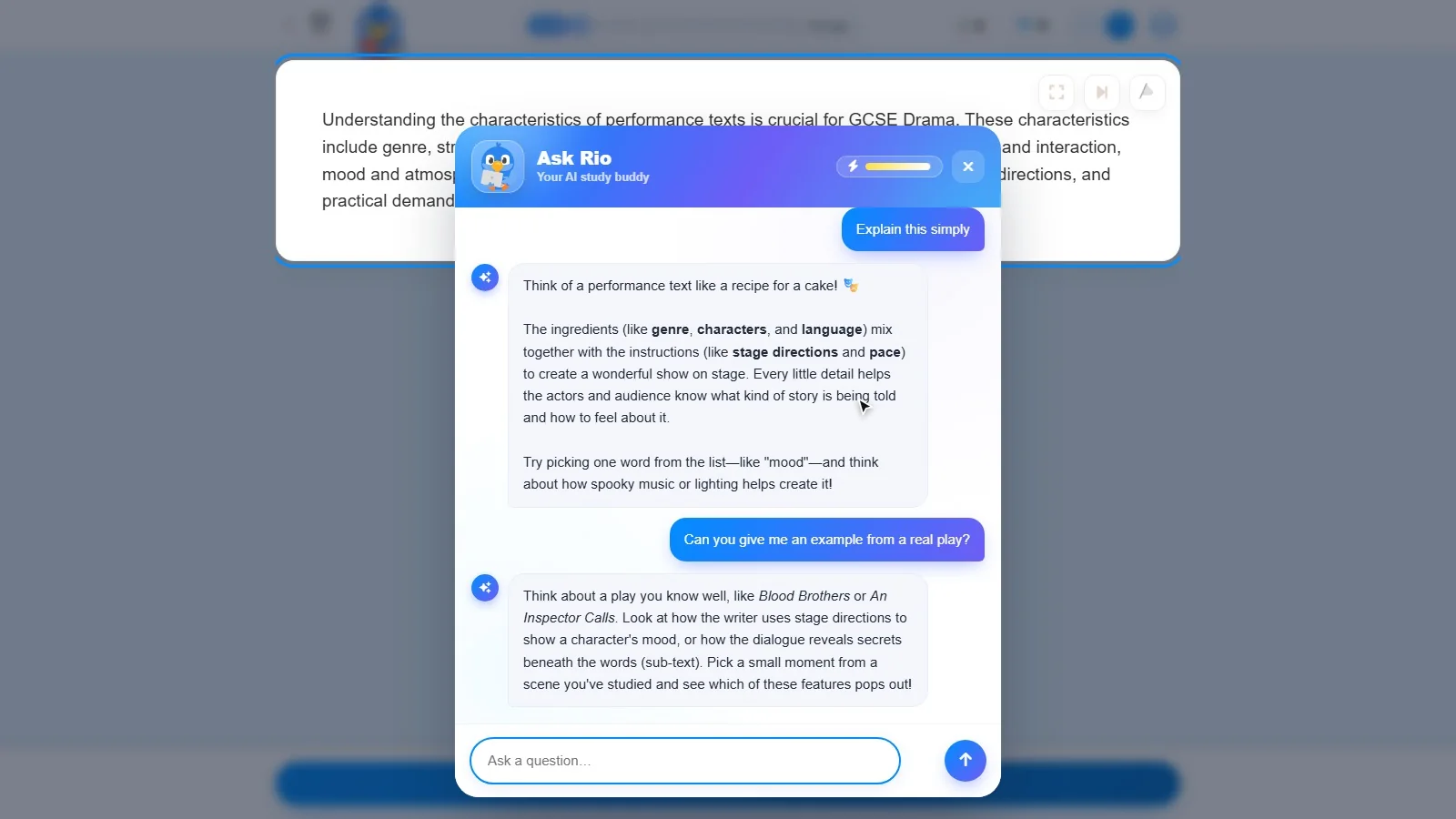
Look at what is behind the panel in that screenshot. It is a properly heavy sentence: the characteristics of performance texts include genre, structure, character, form, style, language, sub-text, and it keeps going. Accurate. Also the sort of thing a tired fifteen-year-old's eyes slide straight off.
Here is what Rio says instead:
Think of a performance text like a recipe for a cake! The ingredients (like genre, characters, and language) mix together with the instructions (like stage directions and pace) to create a wonderful show on stage.
Same idea. Now it has somewhere to live in your head. Then he gives the student something to do with it: pick one word from the list, like mood, and think about how spooky music or lighting helps create it.
And then they asked a follow-up
This is our favourite part. The student in the screenshot types back: Can you give me an example from a real play?
Rio suggests thinking about a play they already know, like Blood Brothers or An Inspector Calls, and looking at how the writer uses stage directions to show a character's mood. Then he tells them to pick a small moment from a scene they have studied and see which features pop out.
Notice what he did not do. He did not hand over the answer to the next question. He pointed them back at their own set text. That is the difference between a study buddy and a cheat sheet, and we spent a long time getting it right.
Ask Rio is open to every signed-in student. And a student practising never draws on their tutor's AI credits.
His other job: tomorrow
Understanding something once is not the same as learning it. Coming back the next day is, and the research on that goes back a long way. So the first time a student opens Tutorio, Rio introduces himself and asks a favour.
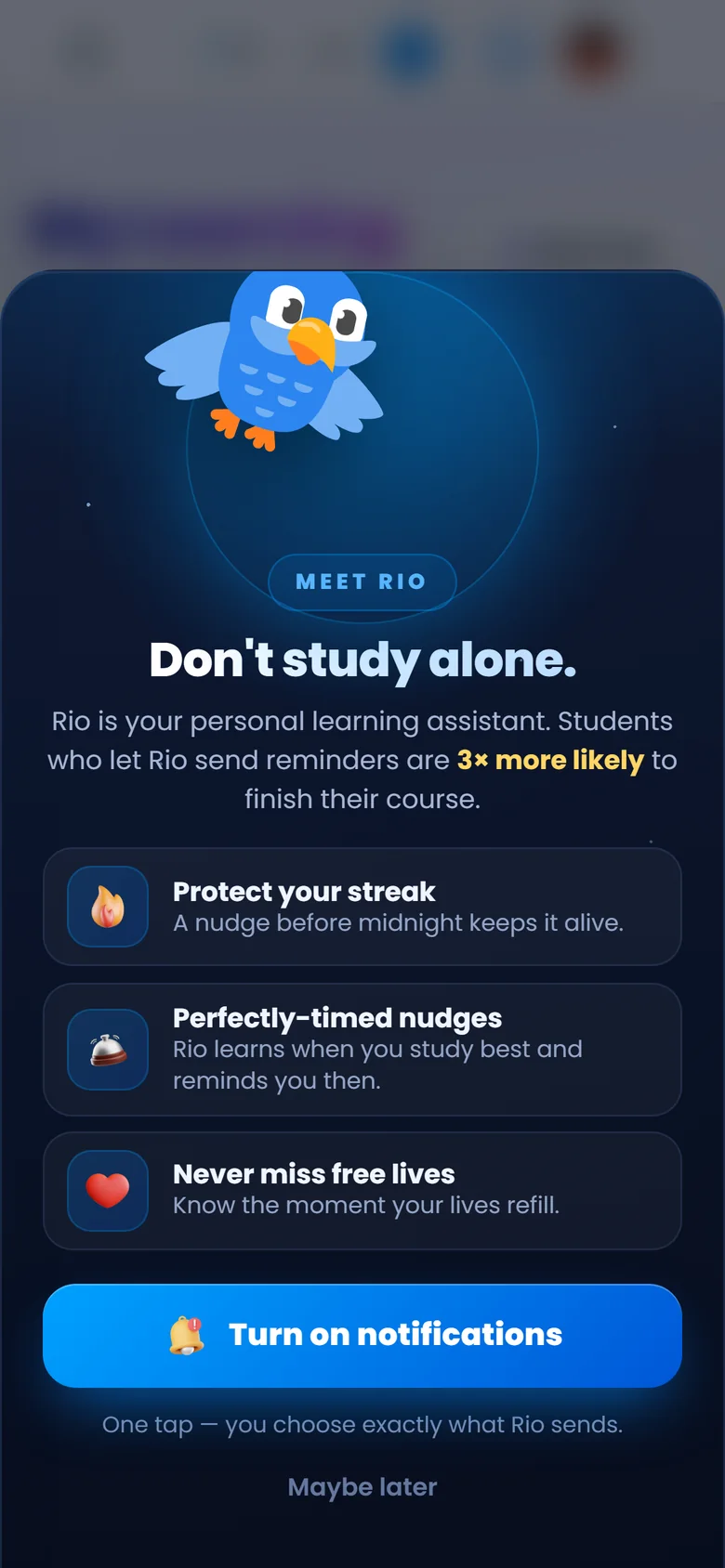
He offers three kinds of reminder:
- Protect your streak. A nudge before midnight, if today's practice has not happened yet.
- Well-timed nudges. Rio learns when a student tends to study, and reminds them then, not at 7am on a Sunday.
- Never miss free lives. A message the moment their hearts have refilled.
Underneath the button it says: one tap, you choose exactly what Rio sends. That is a promise. A student can say no. Anyone who says yes can switch off individual kinds of reminder later, or silence him entirely with one switch.
We built it that way because a reminder you resent is worse than no reminder at all.
A character, on purpose
Rio waves when you turn up. He sits on home screen widgets beside a student's streak, and he has a story of his own that unfolds the longer they keep learning.
None of that teaches anyone physics, and we will not pretend otherwise. But ask a teenager why they open one app and not another and the answer is never "the pedagogy". It is that the place feels like somewhere. A bird who is pleased to see you turns out to do a lot of that work.
What Rio is not
He is not a tutor, and he is not trying to be. He does not set the work. He does not mark it. He does not decide what a student should learn next. A person does that, with the whole class in view and years of knowing what tends to go wrong.
Rio covers the gap between sessions. The twenty minutes on a Wednesday night when a student is alone with a hard paragraph, and one clear sentence is the difference between carrying on and giving up.
Questions people ask
What is Ask Rio?
A helper students can open on any lesson card. Rio already knows which card they are on, so one tap on Explain this simply gets a plainer explanation without typing out the question.
Does Rio give students the answers?
No. He explains the idea, suggests something to try, and points students back at their own set text. He does not hand over the answer to the next question.
Is Ask Rio free?
Yes. It is open to every signed-in student, and a student practising never draws on their tutor's AI credits.
Can a student turn Rio's reminders off?
Yes. A student can say no at the start, switch off individual kinds of reminder later, or silence Rio entirely with one switch.
Does Rio replace a tutor?
No. Rio does not set the work, mark it or decide what a student should learn next. A person does that. Rio covers the gap between sessions.

Written by the Tutorio team. We build Tutorio, so these posts describe the product as it is today. Every screenshot is a real capture of the app, and anything that changes gets an updated date. Spotted something out of date? Tell us.